QuantitativeBilateral PupillometryFrom Your iPhone
PupiLUX Pro performs a bilateral pupillary light reflex test in seven seconds. Voice-guided, on-device AI analysis produces a 2-page PupiLUX Pro Report — ready to print, share, or file. No dedicated hardware. No consumables.
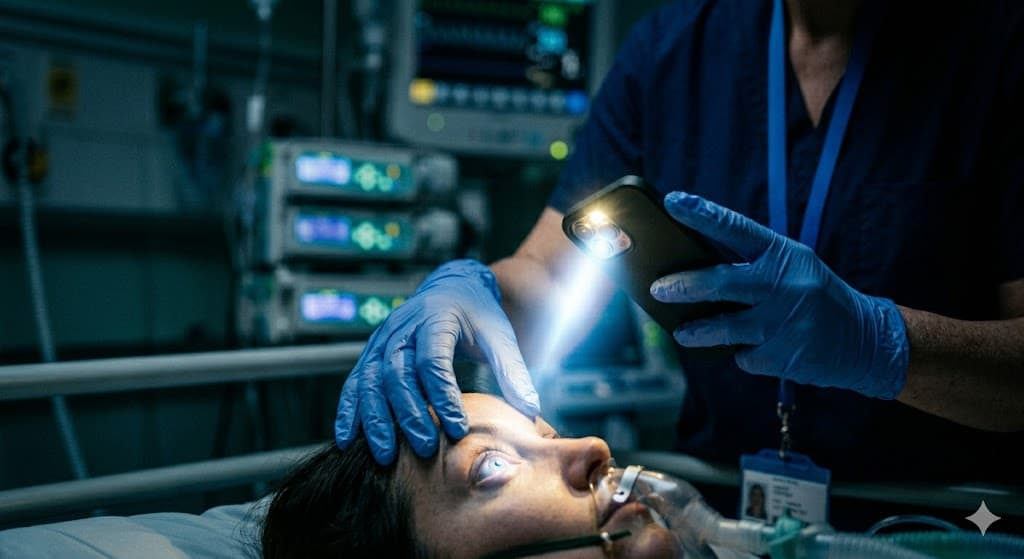
"B/L NSNR" was fine for the 20th century
The penlight exam is subjective, hard to document, and impossible to trend. Your patients deserve quantitative data.
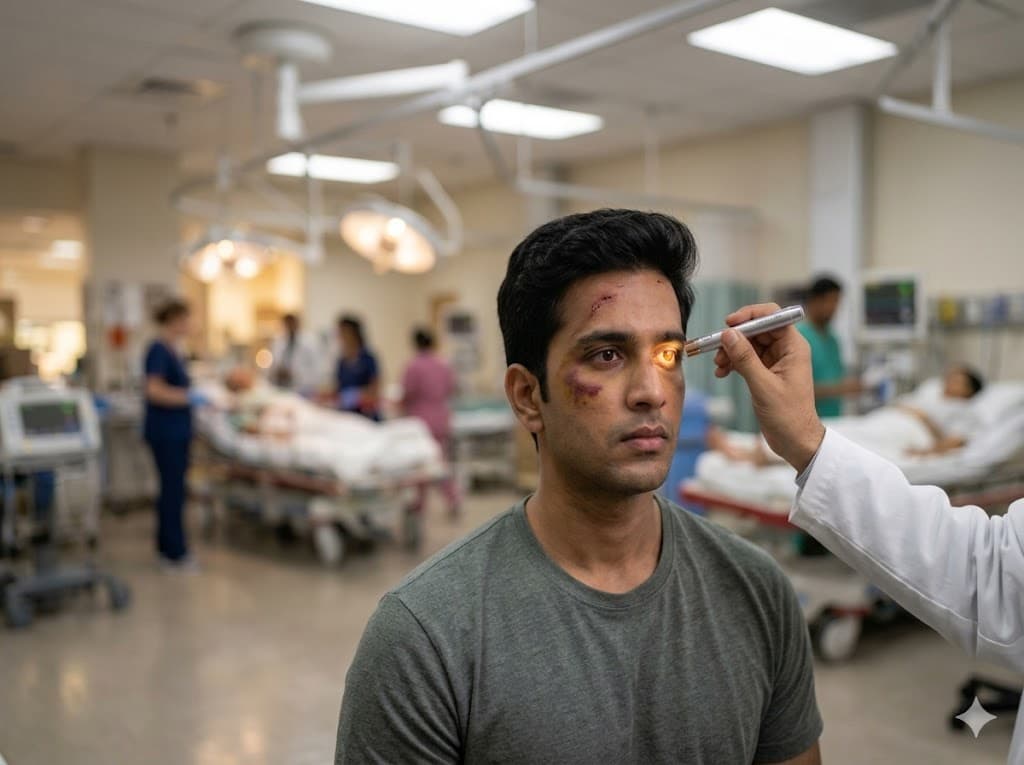
Penlight Exam
Subjective, undocumented, no data captured
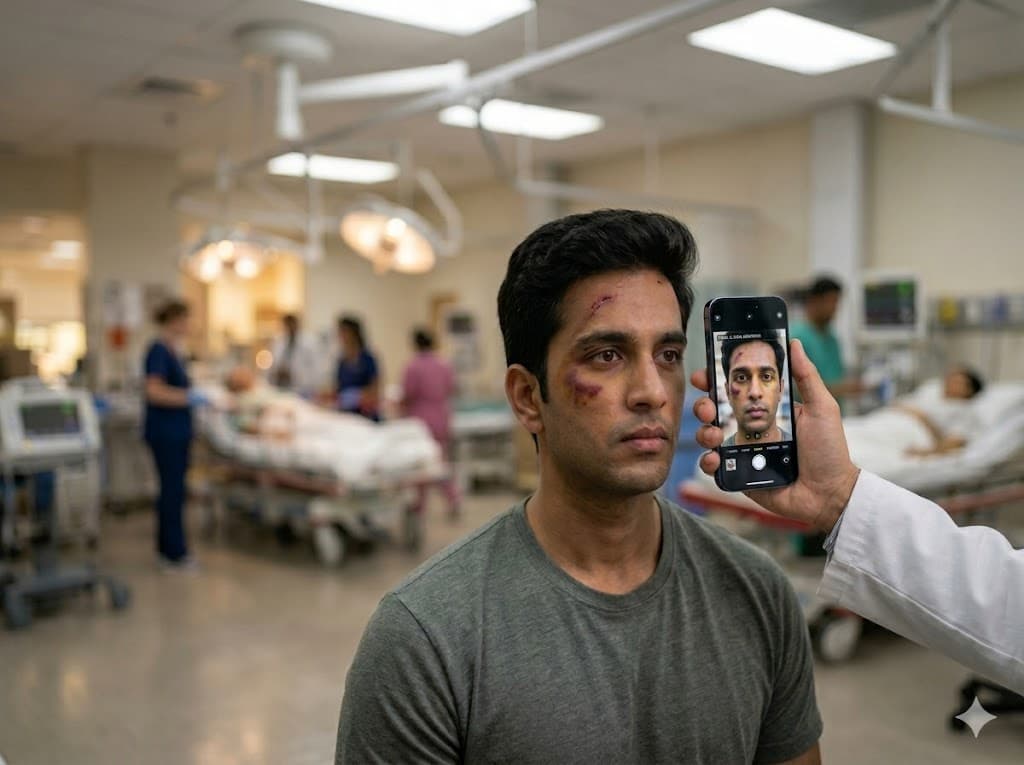
PupiLUX on iPhone
Quantitative, documented, shareable PDF
“NSNR tells you the pupil moved. PupiLUX tells you how much, how fast, and how it compares.”
Different problems. Same seven-second test.
In the ICU, nobody is doing the exam between rounds. In the ER, even when exams happen, the data vanishes — and there are 95 minutes before CT where clinicians are flying blind.
Neuro-ICU
Quantitative monitoring between rounds
The intensivist examines pupils at morning rounds. Between rounds, junior nurses — many with less than a year's experience and 55% annual attrition — are the only eyes on 20 critically ill patients. No quantitative measurement happens in the interval, so clinicians return the next morning with no objective neurological data from the shift.
PupiLUX gives the nursing team a standardised 7-second test they can run every 4 hours — producing the same quantitative metrics the intensivist would record.
Clinical Scenario
The 19-Year-Old Boy
Head injury, temporal fracture, GCS 10. Family refuses ICP monitoring — too expensive. Eighteen hours later at morning rounds, left pupil 6mm vs right 3mm. CT confirms a subdural haematoma. With PupiLUX: a 7-second test every 4 hours flags asymmetry at hour 12 — left 4.5mm, right 3mm. CT happens 6 hours earlier. SDH caught smaller.
Applicable to: Every bed in the neuro-ICU: TBI, ICH, SAH, malignant MCA infarction, post-thrombectomy, post-op neurosurgical.
Emergency Room
The 95-Minute CT Gap
Between ER arrival and CT scan, the median wait in Indian hospitals is 95 minutes (IMPETUS 2025, 23 medical colleges, n=2,018). During that window, clinicians have no objective neurological data. And even when exams happen, 85% of results go undocumented.
PupiLUX produces quantitative data in 7 seconds and auto-generates the documentation. The PDF is the medical record — no writing required.
Clinical Scenario
Mr. Ramesh, 35
Two-wheeler accident. Smells of alcohol. GCS 14, talking. Before CT, three stab-wound patients arrive — all staff pulled. Four hours later, GCS dropped to 9, right pupil blown. With PupiLUX: baseline at admission shows right 3.2mm, left 3.1mm. Repeat at hour 2 — right 4.5mm, constriction velocity declining. Neurosurgeon called 2–3 hours earlier.
Applicable to: Altered sensorium, head injury observation, intoxication + possible injury, snakebite, OP poisoning, post-cardiac arrest.
Clinical scenarios are hypothetical illustrations of workflow integration — not validated PupiLUX outcomes.
Start using PupiLUX today
Bilateral pupillometry for the ICU and ER. Voice-guided, on-device AI, PupiLUX Pro Reports. 100 free tests included on install.
Requires iPhone with rear camera & torch. iOS 17.0 or later.